

DIN 6340 defines plain washers designed for high-strength bolted connections, especially in precision engineering and mechanical applications. These washers are thicker and larger in diameter compared to standard washers, providing better load distribution and increased resistance to deformation.
DIN 6340 washers are commonly used in applications where high-strength bolts, preloaded joints, and heavy-duty fastening are required, such as machine tools, industrial assemblies, and automotive components.
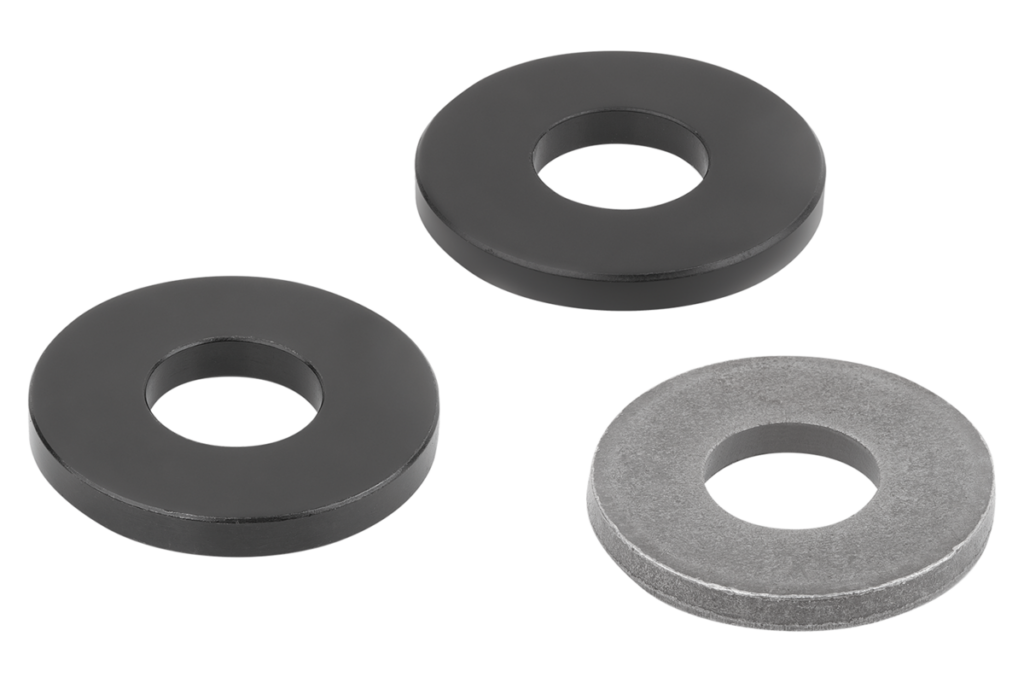
Key Characteristics
✔ Increased Thickness: Provides better force distribution and resistance to bending.
✔ High Load Capacity: Suitable for high-strength bolted joints.
✔ Reduced Deformation: Minimizes settling effects under heavy loads.
✔ Material Options: Available in hardened steel (HV 200-300), stainless steel, and brass.
✔ Standard Compatibility: Used with DIN 912, DIN 6912, DIN 7984 screws.
✔ Applications: Heavy machinery, automotive components, structural fasteners, and precision assemblies.
Dimensions for DIN 6340 Plain Washers
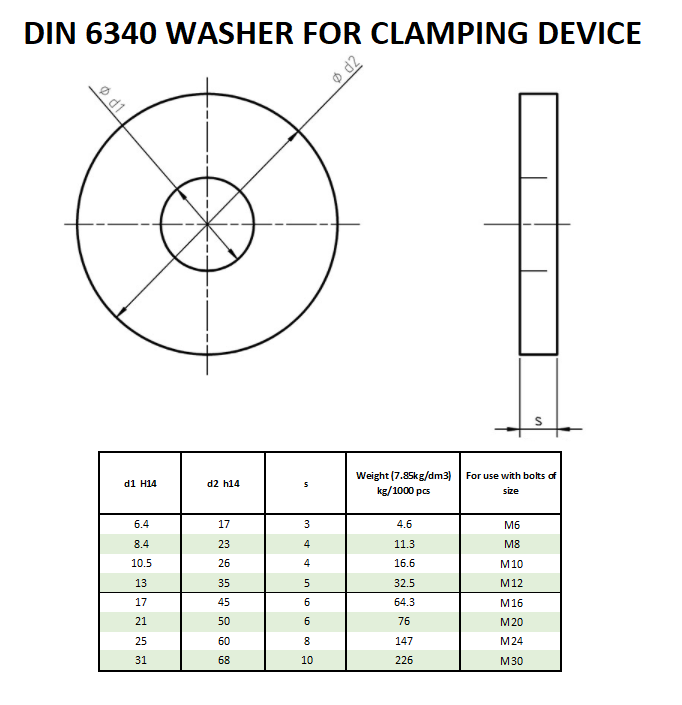
📌 Dimensions are approximate and may vary slightly based on manufacturer tolerances.
Applications of DIN 6340 Plain Washers
- Machine Tools & Precision Engineering – Ensures secure and stable fastenings.
- Heavy-Duty Machinery – Distributes force in high-load bolted connections.
- Structural Fasteners & Steel Constructions – Prevents damage to surfaces and reduces stress.
- Automotive & Aerospace – Used in high-strength bolted joints for better reliability.
- Industrial Equipment – Protects mating surfaces from wear and deformation.
Standards and Compatibility
📌 Important Notice on Standards Validity
This information is for reference purposes only. Users should consult official sources and updated standards to ensure compliance with current regulations. The validity of standards may change over time, so it is recommended to verify them through recognized engineering and standardization organizations (ISO, DIN, ANSI, etc.).
📌 Check with relevant standardization bodies in your region to confirm whether a specific standard is still valid and applicable. Regulations and industry requirements may vary based on region and application.