

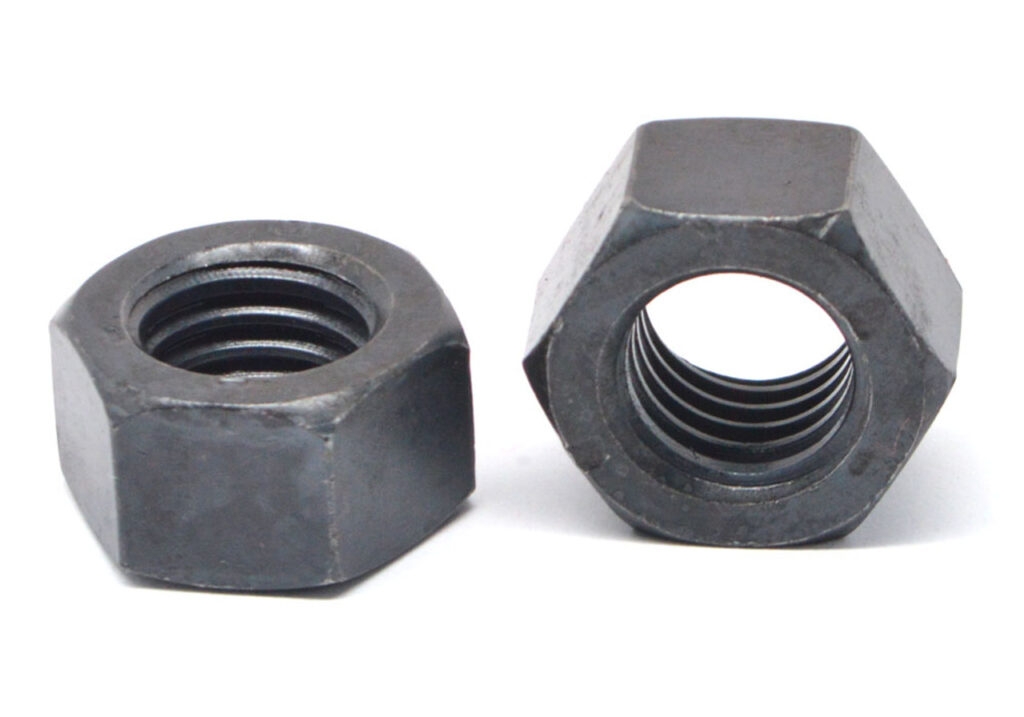
DIN 934 specifies hex nuts (also known as hexagon nuts), one of the most common types of nuts used in conjunction with bolts and screws for fastening. These nuts have a hexagonal shape, allowing for tightening with a wrench. DIN 934 is a widely used standard for general purpose hex nuts.
Key Features of DIN 934 Hex Nuts
- Shape: Hexagonal (six-sided)
- Thread Type: Metric coarse thread (other thread types may be available)
- Material Options: Available in steel (various grades), stainless steel (A2, A4), brass, and other materials
- Sizes: Wide range of sizes, typically designated by the nominal thread diameter (e.g., M3, M4, M5, etc.)
Applications of DIN 934 Hex Nuts
DIN 934 hex nuts are used in a broad range of applications, including:
- General Assembly: Used in various manufacturing and assembly processes.
- Construction: Fastening structural components in buildings and infrastructure.
- Automotive: Securing parts in vehicles and machinery.
- Machinery: Joining components in industrial equipment.
- DIY Projects: Used in home repairs and various DIY applications.
Technical Specifications and Dimensions
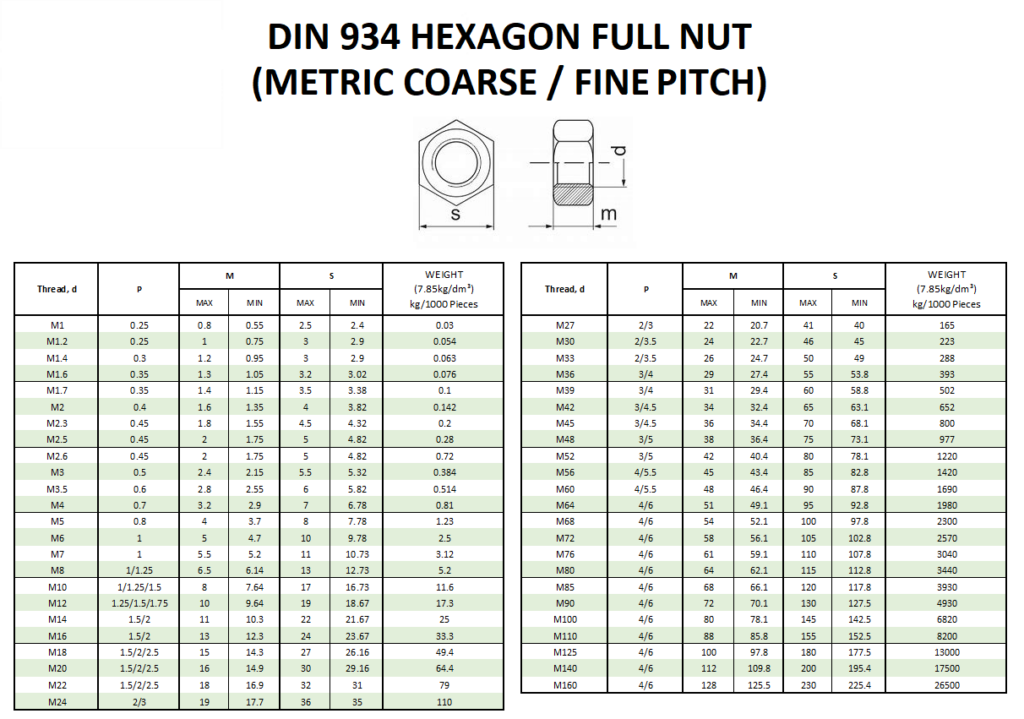
Below is a general overview of dimensions for DIN 934 hex nuts. However, it’s crucial to consult the full DIN 934 standard document for the most accurate and up-to-date information, as these are typical values and variations can exist.
| Thread Size (M) | Width Across Flats (s) mm | Height (m) mm |
|---|---|---|
| M3 | 5.5 | 2.4 |
| M4 | 7 | 3.2 |
| M5 | 8 | 4 |
| M6 | 10 | 5 |
| M8 | 13 | 6.5 |
| M10 | 16 | 8 |
| M12 | 18 | 10 |
| M16 | 24 | 13 |
| M20 | 30 | 16 |
Related Standards
For related information, consider these other fastener standards:
- DIN 985: Nylon Insert Lock Nuts – Hex nuts with a nylon insert to prevent loosening due to vibration.
Conclusion
DIN 934 hex nuts are essential and versatile fasteners widely used across various industries. Their hexagonal shape allows for easy tightening and loosening with standard wrenches. Always refer to the official DIN 934 standard document for precise specifications before use.
Important Notice on Standards Validity
This information is for reference purposes only. Always consult official sources and the latest versions of standards to ensure compliance with current regulations. Standards can be updated or withdrawn, so verification is essential. Check with recognized engineering and standardization organizations (ISO, DIN, ANSI, ASME, etc.) for the most current and applicable standards. Regulations and industry requirements can vary by region and application.